The complete guide to kitchen worktop materials
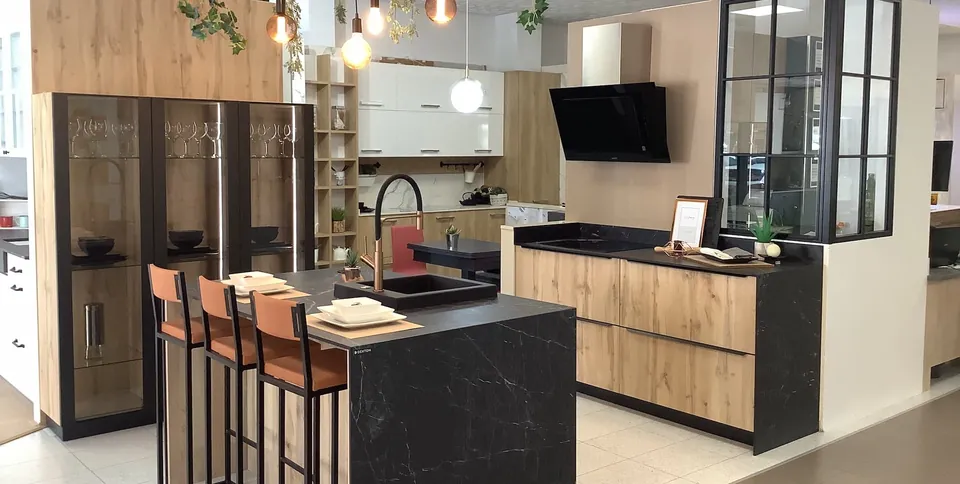
Choosing the material for your kitchen worktop is an important decision that will affect both the look and the functionality of this space.
Each material offers unique characteristics in terms of durability, resistance, maintenance and appearance. In this article we explore the most popular options and give you the information you need to make an informed decision.
Kitchen worktops: granite, the elegant classic
- Characteristics: granite is an extremely hard natural stone that resists heat and stains. It comes in a wide variety of colours and patterns, making it a versatile option for any kitchen style.
- Advantages: exceptional durability, resistance to high temperatures, easy maintenance and a wide range of looks.
- Disadvantages: it can be expensive, needs periodic sealing to protect it from stains and can crack if exposed to sudden temperature changes.
Kitchen worktops: quartz, perfectly engineered
- Characteristics: quartz is an engineered surface made of 93% natural quartz and resins. It is extremely hard, non-porous and resistant to stains and scratches.
- Advantages: durability, resistance to stains and heat, a wide variety of colours and patterns, easy maintenance and an appearance similar to granite.
- Disadvantages: higher cost than synthetic options, although generally cheaper than natural granite.
Kitchen worktops: marble, elegance and sophistication
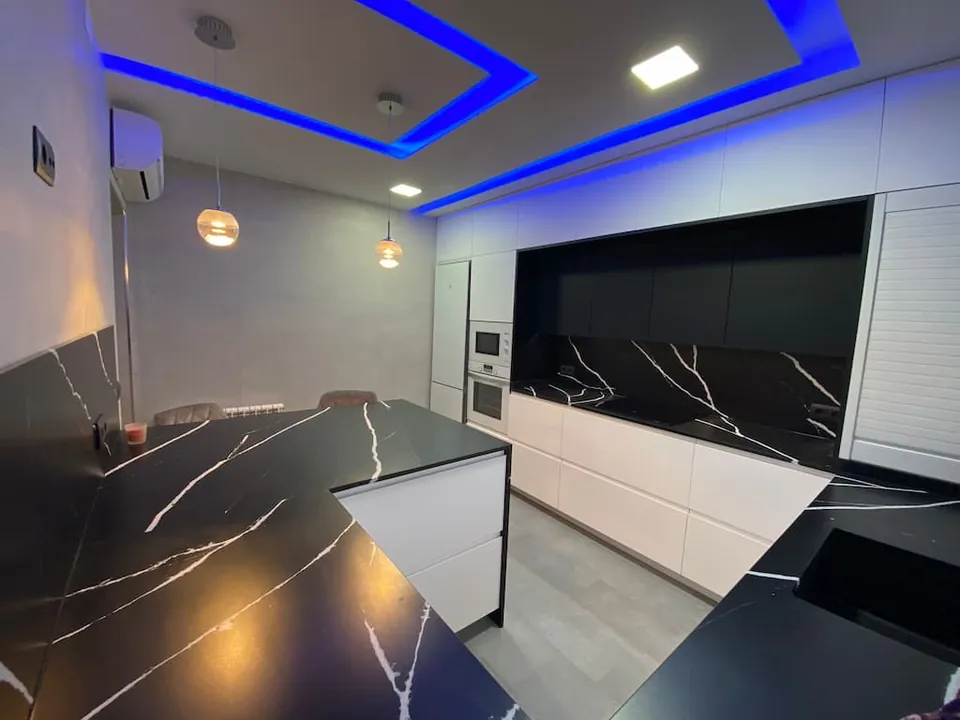
- Characteristics: marble is a natural stone with unique beauty and characteristic veining. It is smooth to the touch and adds a touch of luxury to any kitchen.
- Advantages: elegant, sophisticated appearance, wide range of colours and patterns.
- Disadvantages: porous, prone to stains and acids, requires regular and careful maintenance, and is softer than granite or quartz.
Kitchen worktops: stainless steel, modern and practical
- Characteristics: stainless steel is a durable material, resistant to high temperatures and easy to clean. It offers a modern, industrial look.
- Advantages: resistance to stains and heat, easy cleaning, durability, a hygienic and versatile look.
- Disadvantages: it can show fingerprints and scratches, and the noise of objects falling on it may bother some people.
Kitchen worktops: wood, warmth and natural feel
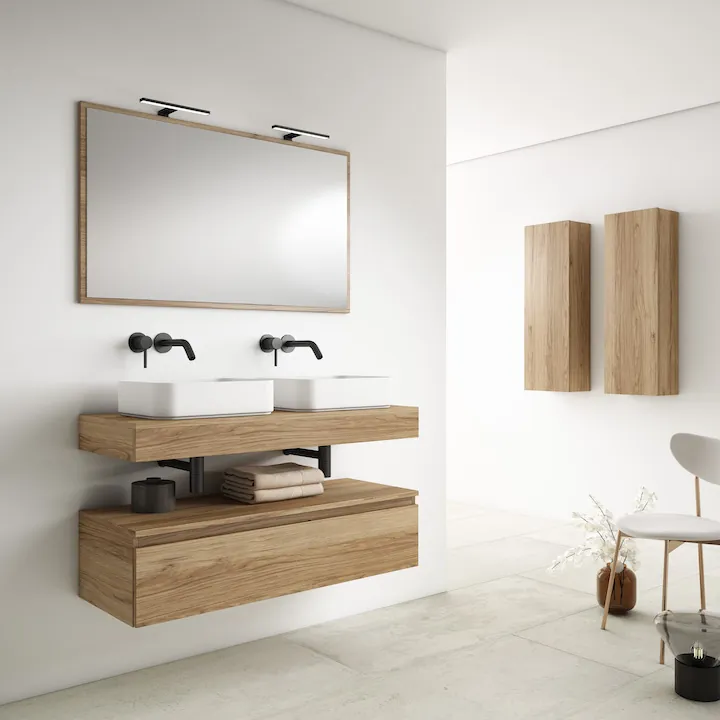
- Characteristics: wood brings warmth and a natural touch to the kitchen. It is a popular option for those looking for a cosy, rustic atmosphere.
- Advantages: warm, natural appearance, wide variety of types and finishes.
- Disadvantages: needs regular maintenance to prevent stains and damage, is sensitive to humidity and high temperatures, and can be more prone to bacteria than other options.
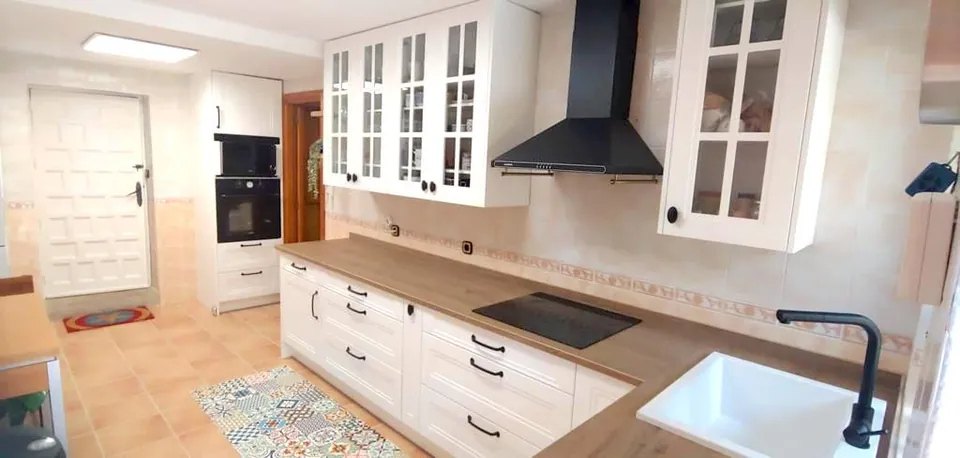
Kitchen worktops: laminate, affordable and versatile
- Characteristics: laminate is a surface made of several layers of resin-impregnated paper. It offers a wide variety of designs and finishes at an affordable price.
- Advantages: affordable, easy to install, moisture resistant and easy to clean.
- Disadvantages: prone to scratches and heat, the edges can peel over time and it is not as durable as other options.
Factors to consider when choosing a kitchen worktop
- Budget: the cost varies significantly depending on the material.
- Lifestyle: consider your cooking habits and how much you will use the worktop.
- Maintenance: some materials require more care than others.
- Looks: choose a material that complements your kitchen design.
- Durability: if you want a worktop that lasts for many years, choose materials such as granite or quartz.
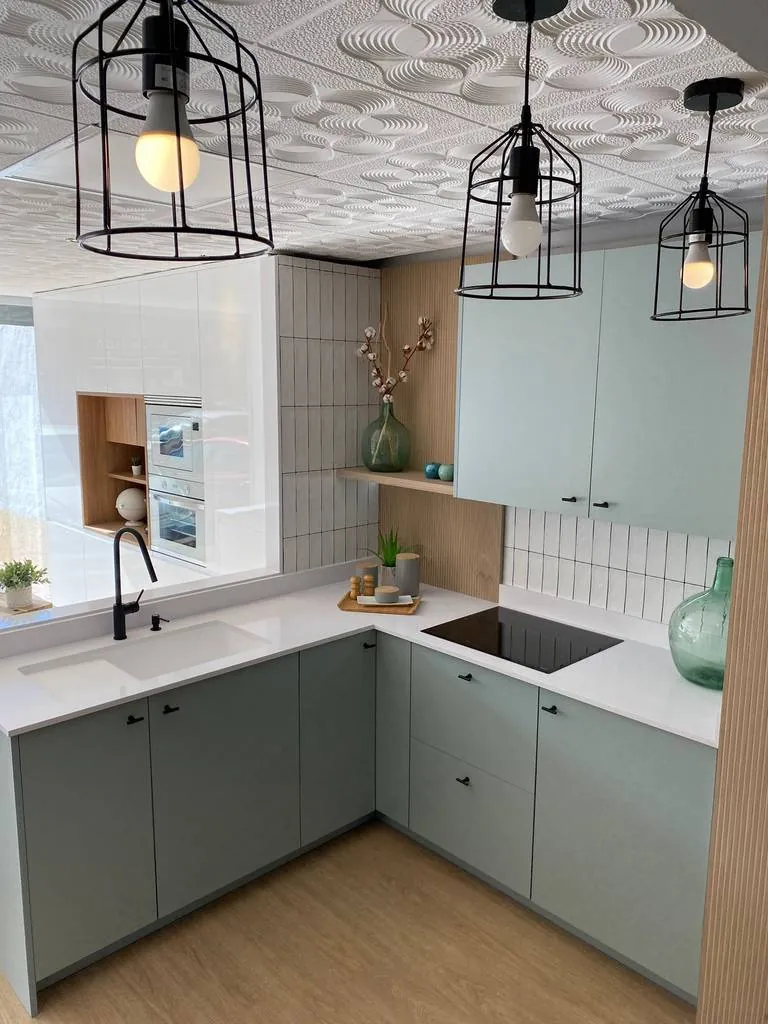
Choosing the material for your kitchen worktop depends on your personal preferences and needs. Each material has its own advantages and disadvantages.
We recommend visiting a specialist showroom or consulting an interior designer for personalised advice.
Do you have a specific question about kitchen worktop materials? Verosil can help.